Take the rote work out. Keep the person in.
Reading, extracting, filling, drafting, classifying — the work that takes your team hours and needs their judgement only at the end. Done in minutes by a model, reviewed by a person, every time.
Every business has a document somebody assembles by hand.
01 — The problemA contract, a report, a proposal, a form — built from information that already exists somewhere else, by someone whose time is worth more than typing. It is the most automatable work in the company and the least likely to be automated, because it is nobody’s project.
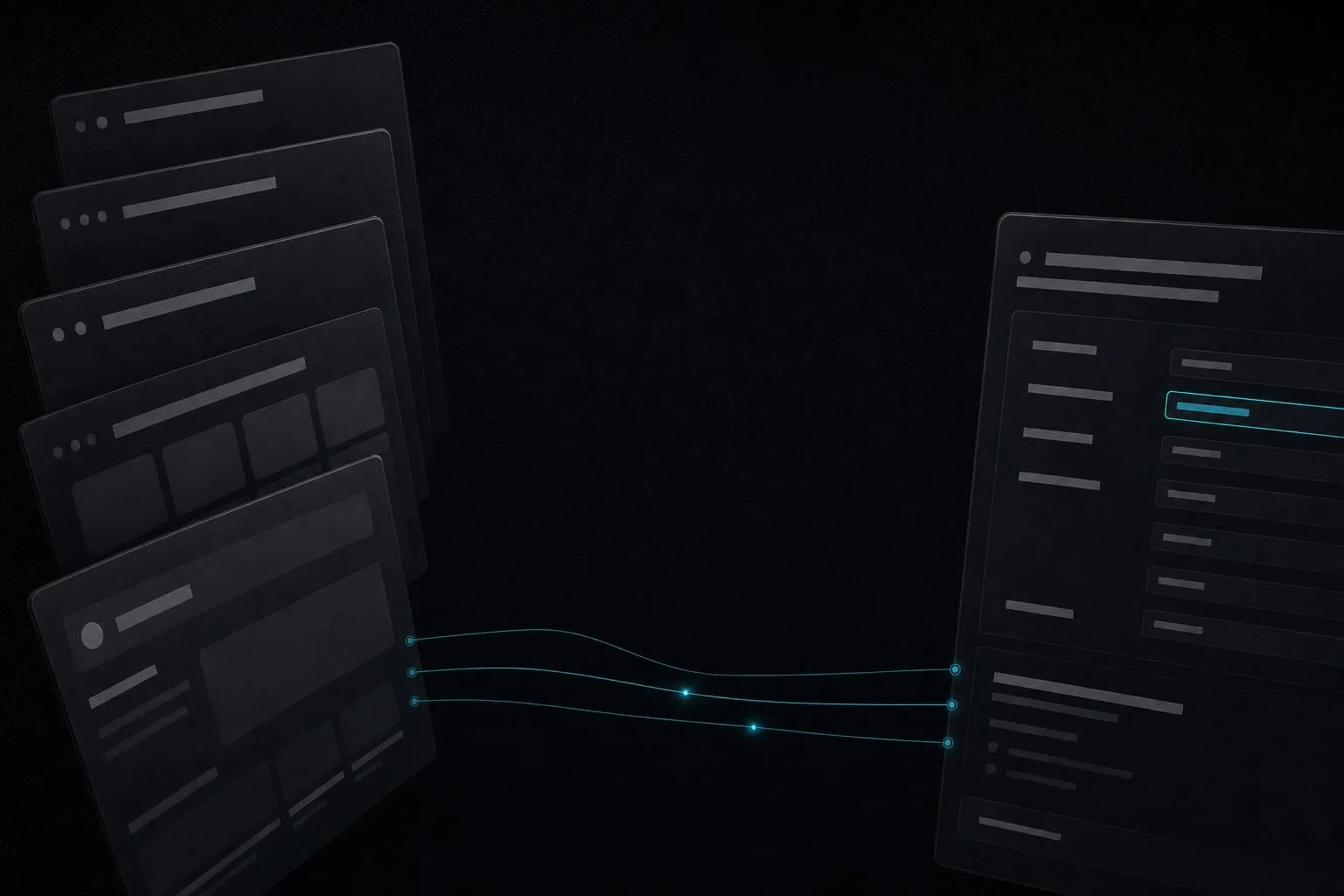
The pattern is the same every time: read the sources, extract the fields, fill the template, hand it to a person to sign. A language model does the first three in minutes. The fourth stays with a human, because that is the part that always needed one — and the tool is built so that every extracted value can be traced back to where it came from.
What we build.
02 — What we build- ✦Document extractionNames, dates, terms, figures and clauses pulled from PDFs, scans and emails — each one linked to the place it was found, so a reviewer can check it in a click.
- ✦Template fillingYour existing templates, filled from the extracted data and rendered to PDF or Word. The document looks exactly as it always has.
- ✦Review before anything leavesA draft opens in an editor; a person checks, edits and issues it. Nothing is sent unreviewed, and the review is recorded.
- ✦Classification and routingIncoming email, forms and files sorted, tagged and sent to the right queue — with a person handling the ones the model is unsure about.
- ✦Drafting and summarisingFirst drafts of the routine reply, the case note, the summary of a forty-page document — for a person to finish, not to send.
- ✦Built into the system you haveInside your CRM, your portal or your document store, not another tab. Same accounts, same permissions, same audit trail.
How it runs.
Every project runs the same five steps, and you see working software every week from the first sprint.
- 01CallHalf an hour. You describe the business problem; we tell you what we think it takes.
- 02Scoping sprintOne to two weeks. We work out what the system is, who uses it, and which features come first.
- 03PlanScope, architecture, sequence and cost in writing before any production build starts.
- 04Build in the openOne team designs, builds and tests. Working software on a staging site every week.
- 05Launch and keep goingLive, monitored, documented, in your accounts. We stay on for what comes next.
Questions about AI automation.
05 — QuestionsIs our data sent to a third party?
+
Documents are processed by a language model provider under a business agreement that excludes training on your data, and the pipeline is built so that only what is needed leaves your system. Where the sensitivity warrants it, we can run models within your own cloud account. The scoping sprint sets this out in writing before anything is built.
How accurate is it?
+
Accurate enough to take the typing away; not accurate enough to remove the review — and it is not designed to. Every extracted value is traceable to its source so the check takes seconds, and the system flags what it is unsure of rather than guessing. Hours of transcription become minutes of checking, and the checking is the part that always needed a person.
Which processes are worth automating?
+
Ones that happen many times a week, follow the same shape each time, and are assembled from information that already exists somewhere. Document filling, intake sorting, routine replies and summaries are the usual candidates. The scoping sprint finds where it applies in your business and what it would save.
Do we need to change how we work?
+
Rarely. The automation is built into the system you already use — the CRM, the portal, the shared drive — and the output is the document you already produce. What changes is that someone reviews it instead of typing it.
What did this look like for a real client?
+
A law firm re-keyed the same PDF templates for every client — hours per document. We built docuweave: it reads the client’s source documents, extracts the fields the template needs, fills it, and opens the draft for a lawyer to review and issue. Minutes per document, with the lawyer still signing every one.
Tell us what you’re trying to build.
Half an hour on a call with our team. Bring a spec, a rough idea or a system that has stopped keeping up, and you leave with our view on what it takes and what comes first.
Zeki Mirza — Founder & product lead
Your first call is with the team that scopes and builds it